Whimsical Christmas Tree: A Designer's Review
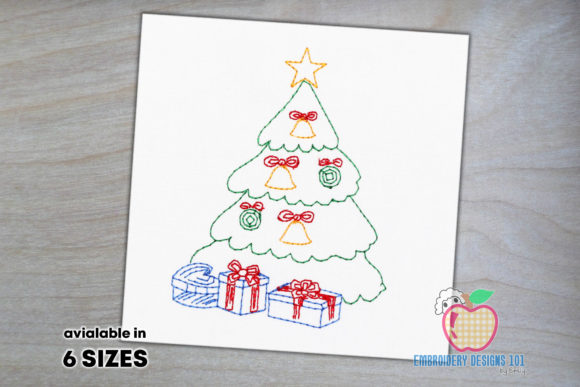
As a designer who spends more time staring at stitch maps than actual trees, I approach every new machine embroidery design with a critical eye. It is not just about whether the image looks cute on a screen; it is about how that digital embroidery file translates into thread, how it sits on fabric, and whether it holds up under the scrutiny of a paying customer. When I first loaded the Whimsical Christmas Tree onto my workstation, the initial impression was one of playful simplicity. This isn't a heavy, dense traditional pine tree laden with complex ornaments. Instead, it offers a stylized line drawing that feels modern and airy.
The mood this design creates is distinctly lighthearted. In a market saturated with hyper-realistic holiday motifs, a whimsical approach can be a breath of fresh air for boutique branding. The layout suggests a hand-drawn quality, which immediately signals "handmade product" to the consumer. For an Etsy seller or a small shop owner, this visual personality is gold. It doesn't scream "mass-produced." It whispers "crafted with care." However, before committing this to a client's custom apparel, I needed to dig deeper into its practical performance.
Real-World Application: The Tote Bag Test
To truly evaluate the Whimsical Christmas Tree, I envisioned a specific real-life scenario: a limited-run holiday tote bag for a local coffee shop. These bags need to withstand frequent washing, carry heavy loads, and look stylish enough that customers actually want to use them. A tote bag provides a large, flat canvas, making it an ideal testing ground for sweatshirt embroidery or tote bag design concepts.
Upon stitching a sample on a medium-weight canvas, the design performed admirably. The line work remained crisp, and the open nature of the drawing prevented the fabric from puckering—a common issue with denser holiday motifs. Because the design relies on clean lines rather than massive fill areas, it maintains its shape even on textured fabrics. If you are planning to use this for a personalized gift like a kitchen towel or an apron, the lack of excessive bulk means the finished product remains soft and functional. Customers are far more likely to use a gift that doesn't feel like a stiff board attached to their clothing.
For those running a craft business, the versatility here is significant. This embroidery project could easily transition from a cozy baby onesie to a chic throw pillow cover. The scale seems adaptable, provided you respect the limits of your hoop. On a baby item, the whimsical nature feels gentle and appropriate, avoiding the aggressive density that can irritate sensitive skin. For a holiday embroidery collection, this design serves as a perfect accent piece that doesn't overpower the garment it adorns.
Navigating Fabric Challenges and Stitch Density
While the design shines on stable woven fabrics, caution is required when moving to trickier materials. If you intend to place this on a stretchy knit or a thin, dark fabric, your preparation game must be strong. The stylized lines rely on contrast. On a dark navy sweatshirt, for instance, you must ensure your thread colors pop sufficiently. A metallic gold or a bright crimson could work beautifully, but a muted green might get lost, ruining the visual impact of the finished product.
Stitch density is another factor to consider. Since this appears to be primarily composed of running stitches or light satin work rather than heavy fill stitches, it is generally forgiving. However, on curved surfaces like caps or hats, long runs of stitching can sometimes bridge gaps if the stabilizer isn't robust enough. I would strongly advise using a cut-away stabilizer for anything that will be washed repeatedly, especially if you are selling these as small shop products where reputation hinges on durability. Do not skimp on the backing; the integrity of the line drawing depends on it.
Furthermore, tiny details in line drawings can sometimes vanish if the hoop size is too small and the design is scaled down aggressively. If you are creating an embroidered patch or a small pocket detail, verify the minimum viable size. Zoom in on your digitizing software. Can you still see the whimsical quirks of the tree shape? If the lines merge into a blob, you have gone too small. Always test on scrap fabric that matches your final material before cutting into expensive inventory.
Commercial Viability and Brand Consistency
For commercial embroidery projects, consistency is key. The Whimsical Christmas Tree offers a level of professionalism that enhances brand trust. When a customer receives an item with clean, intentional stitching, it reflects well on the maker. This design avoids the cluttered look that often plagues seasonal merchandise, allowing it to fit seamlessly into a broader brand aesthetic. It works well for printable mockups used in online listings, as the clear lines translate effectively to digital previews, helping potential buyers visualize the custom apparel before purchasing.
However, a crucial note for all creative entrepreneurs: always confirm the licensing terms before selling. Just because a design is whimsical doesn't mean it is free for commercial use. Check whether the embroidery file allows for unlimited physical sales or if there are restrictions on digital redistribution. If you are an Etsy seller looking to expand your catalog, ensuring you have the right to sell finished items featuring this tree is non-negotiable.
Final Verdict for the Practical Maker
In conclusion, the Whimsical Christmas Tree is a standout choice for designers seeking a balance between festive charm and modern minimalism. It excels in applications where softness and drape are priorities, such as scarves, lightweight jackets, and home decor linens. Its strength lies in its ability to look deliberate and artistic rather than generic.
Before launching your production run, remember to check the specific file formats compatible with your machine. While the visual appeal is high, the technical execution relies on your setup. Test different thread tensions, compare light and dark fabric backgrounds, and ensure your stitch density settings align with your material. By treating this design with the respect it deserves—acknowledging both its artistic flair and its technical requirements—you can create holiday gifts and merchandise that resonate with buyers and stand the test of time. It is a solid addition to any designer's library, ready to bring a touch of whimsy to your next big project.